Remember to join the free Webinar: 5 Best Practices with Analyzing Sales Performance, hosted by OpenSymmetry and presented by Greg Livengood.
When? Tuesday, July 22nd 1pm (Central).
Find out more about the presenter here.
Register here.
Remember to join the free Webinar: 5 Best Practices with Analyzing Sales Performance, hosted by OpenSymmetry and presented by Greg Livengood.
When? Tuesday, July 22nd 1pm (Central).
Find out more about the presenter here.
Register here.
 Based on my experience and on common sense, there are some project components which are easier to offshore than others.
There is a very promising webinar coming up, hosted by OpenSymmetry and presented by Greg Livengood.
I particularly wanted to promote this event because I worked with Greg for several months on an Accenture project, and I know that when it comes to Sales Performance Analytics, he REALLY knows what he is talking about. Expect a very insightful presentation by a friendly, dynamic and easy-going individual who built a world-class reputation as a sales performance analytics leader and pioneer.

Event Description:
With the economy in a downward slope, sales leaders more than ever need 'Sales Performance Analytics' and efficient ways to proactively identify potential problems and opportunities.
Most companies have the information they need to improve sales performance, however, many sales managers are challenged with accessing and correctly interpreting the data.
Greg Livengood, Senior Business Analyst with Livengood Consulting Group, will discuss how to leverage the 5 best practices in sales performance analytics that can boost your sales force performance.
• Visualize Sales Performance
• Develop Corporate Alignment
• Simplicity
• Build a Self-Sufficient Solution
• Engagement at the Executive Level
Click here to register.
 Projects can be partially or completely outsourced. The outsourcing can be done partially or entirely offshore. The most common scenario I usually encounter is when a company outsources a project to a consulting company. The consulting team usually works on-site, and often have several resources located offshore. There seems to be a trend for consultant who used to work on-site, to be allowed to work remotely.
Setting aside all ethical and macro-economics discussions about offshoring, here are some of the main pros and cons.
Cost: Savings could be only marginal, especially with rising labor costs in some countries (especially in India)
Quality: This is a challenge for on-site and offshore team alike. Offshore teams are usually very good at achieving very high quality standards. However, quality is still perceived as a higher risk with offshore teams.
Security: Quality is another concern most companies have, especially when dealing with confidential employment information. There are very secure mechanisms to collaborate, even across continents, but security is a topic which requires particular attention.
Key to Success
In my opinion, the key to successfully leveraging an offshore team is in:
 I'm planning to write several articles related to sales performance management outsourcing and offshoring. Let me first define what outsourcing and offshoring means.
 I came across an interesting article by Roy Altman: Avoiding "Gotcha's" - Tips and Techniques that Drive Successful Implementation Projects.
If your processes currently result in chaos, and you automate them, you end up with automated chaos.
 Wikipedia has one of the best definitions on the net for a "naming convention": A naming convention is a convention for naming things. Awesome!
For example, a credit rule could be called CR_AE_description. Some systems could have a direct credit rule and an indirect credit rule; in such case my abbreviation could be DC and IC instead. In some systems I may want to prefix a formula with F (if all objects can be displayed in the same view), if not, then it would not be necessary to explicitly say that a formula is a formula.
Naming of output is also important: The importance of naming an object may be obvious, but in the case of rules, the output of such rule should also be named carefully. A result name that makes sense can often by "Rule name _ result" or something similar.
Getting Started...
It is important to define a naming strategy early on in the project - before any detailed / technical design documents are created. The strategy should be illustrated on one page to enable the implementers to quickly see how to name the different objects. This "page" should be distributed to everyone involved in the implementation and be given to new joiners as well.
The first steps in defining the naming strategy is to find out if the application being used has a set of best naming practices or standards. In the case of an upgrade, it is important to stick to previously used naming strategy.
Happy Naming! I recently had the opportunity to spend an hour with Liz Cobb, Founder and CEO of Makana Solutions, and with Arthur Gehring, Director of Marketing.
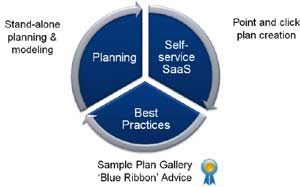 As I mentioned several times, one of the biggest challenges faced by sales management or consultants when implementing a sales compensation system is the “complexity” of the compensation plans. Sometimes compensation plans are quickly described in a e-mail or over the phone, or almost handed over written on a napkin. In other scenarios, they are can be well documented but may still lack clarity, key aspects, or examples, or may be lengthy. Finally, even if a compensation plan is well documented, it does not mean that the plan is effective and well aligned with the objectives and budget of the company.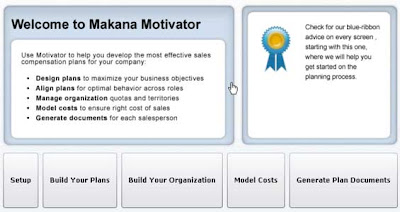
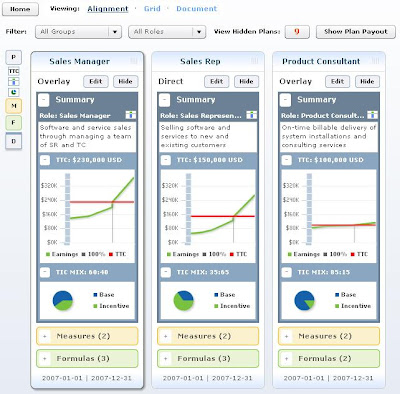
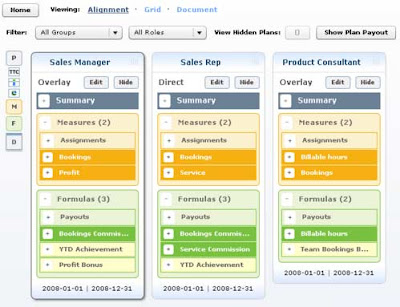
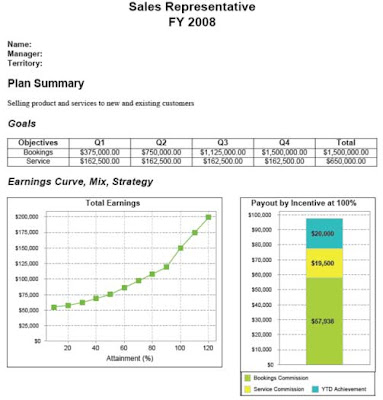 Read more about what customers have to say about Makana Motivator.
Learn about banking industry best practices from Accenture to ensure that your front line sales people are selling efficiently and effectively - and selling the right products to the right customers. Together with strategies and best practices, you'll also learn how other financial services organizations are using the latest solutions and technologies to optimize these processes, and achieve competitive advantage.


